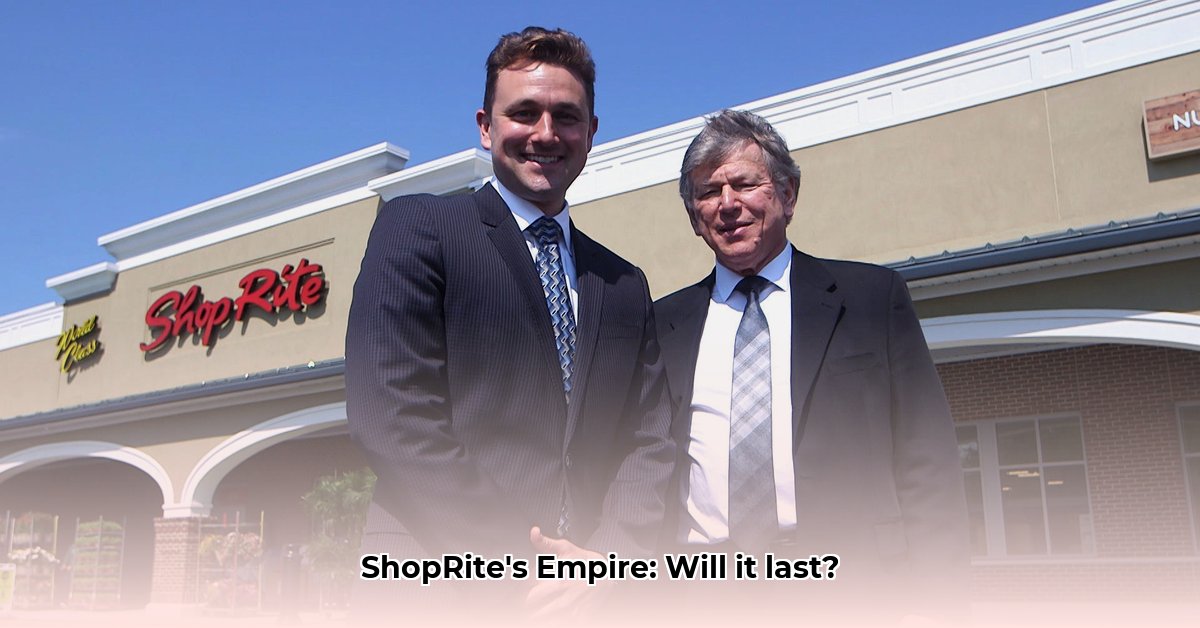
Richard Saker's ShopRite: A New Jersey Grocery Giant
Richard Saker's ShopRite isn't your average supermarket; it's a New Jersey institution. Boasting over three dozen locations and employing 10,000 people, it's a significant player in the state's food industry. But its success isn't accidental. It's a calculated blend of shrewd business strategies, a deep commitment to local communities, and a remarkable ability to adapt to a rapidly changing market. This article explores the key factors behind ShopRite's growth, the challenges it faces, and its strategic roadmap for continued success. To learn more about Richard Saker's personal wealth, see his net worth here.
From Local Roots to Regional Dominance
Richard Saker's journey isn't a classic rags-to-riches tale, but it's a compelling story of steady growth built on strong foundations. ShopRite's success didn't happen overnight. It's the product of decades of meticulous planning, smart decisions, and a genuine commitment to the communities it serves. For instance, ShopRite's significant donations to Fulfill, a local food bank, demonstrate this commitment. This isn't just corporate social responsibility; it's strategic relationship-building, fostering customer loyalty in a market increasingly concerned with ethical business practices. It's about more than just selling groceries: it's about building relationships. How else could a regional grocery chain become so deeply ingrained in the fabric of New Jersey life?
Adapting to Change: Navigating the Modern Grocery Landscape
The grocery business is fiercely competitive. National chains, smaller regional competitors, and the ever-growing presence of online giants are constantly vying for market share. Staying ahead requires constant evolution. ShopRite's online presence, complete with personalized recommendations and targeted advertising, demonstrates this commitment to innovation. However, they've undertaken this digital transformation responsibly, complying with New Jersey's stringent privacy regulations and providing clear opt-out options for customers. This shows a focus on building trust alongside profits—a crucial element in maintaining long-term success. Isn't this thoughtful approach to data usage a testament to their customer-centric strategy?
Challenges and Opportunities: The Balancing Act
Large-scale enterprises face inherent challenges. Economic shifts, such as inflation and fluctuating consumer spending, present significant hurdles for ShopRite. Maintaining the smooth and efficient operation of numerous locations poses additional complexities. Yet, these challenges also present opportunities. The ongoing expansion of ShopRite, encompassing new store constructions and renovations, highlights this proactive approach to enhancing the customer experience and increasing operational efficiency. But how will ShopRite leverage technology—from advanced inventory management to streamlined supply chains—to propel these improvements further?
Charting a Course for the Future: A Multi-Pronged Strategy
ShopRite's future prosperity rests on several strategic initiatives, both short-term and long-term.
Short-Term Goals (Next 12 Months):
- Complete planned store openings and renovations: Directly enhancing customer experience and operational effectiveness.
- Refine online customer engagement: Further improving the online experience, focusing on personalization and intuitive navigation.
- Maximize supply chain efficiency: Streamlining the supply chain to reduce costs and improve product availability.
Long-Term Goals (3-5 Years):
- Expand product offerings: Introducing more private label brands and increasing organic/sustainably sourced products to meet evolving consumer demands.
- Forge strategic partnerships: Collaborations with other businesses to unlock new opportunities and expand reach.
- Adapt to evolving consumer habits: Staying ahead of trends in online grocery shopping and delivery services.
This multi-faceted strategy is designed to benefit all stakeholders: ShopRite, its employees, customers, investors, and the communities it serves. Each aspect builds upon the others, creating a synergistic effect for long-term growth and sustainability. What innovative strategy will prove most impactful?
Risk Mitigation: A Proactive Approach
Even the most successful businesses face risks. For ShopRite, these include intense competition, economic downturns, technological disruption, supply chain vulnerabilities, and potential regulatory changes. ShopRite is proactively addressing these challenges:
| Risk Category | Probability | Impact | Mitigation Strategy |
|---|---|---|---|
| Intense Competition | High | High | Differentiation (community engagement, private label brands) |
| Economic Downturn | Medium | High | Cost control, efficient supply chain management, flexible pricing |
| Technological Disruption | Medium | Medium | Continuous investment in technology and innovation |
| Supply Chain Issues | Medium | Medium | Diversify suppliers, strong supplier relationships, improved inventory |
| Regulatory Changes | Low | Medium | Monitor regulatory developments, ensure full compliance |
By proactively identifying and mitigating these risks, ShopRite is positioning itself for long-term stability and growth within the dynamic grocery landscape.
Conclusion: The Enduring Legacy of ShopRite
Richard Saker's ShopRite is more than just a supermarket; it's a symbol of thoughtful planning, adaptability, and a deep commitment to its customer base. Its future success hinges on its ability to continue to evolve, innovate, and respond to the ever-changing needs of the modern consumer. The ShopRite story is a continuing narrative of success built on strong foundations and a keen awareness of the dynamics of the ever-evolving grocery industry. But how will ShopRite navigate the challenges of tomorrow? Only time will tell.